


At Unphish, the platform has always been shaped by the problems organisations are actually facing.
Scams, phishing and online impersonation move quickly. A fake website or impersonation page might be reported by a customer, but by then it may only be one part of a much wider campaign.
For businesses trying to protect their customers, their brand and their reputation, the challenge is not just finding threats. It is finding them early enough, understanding what they are connected to, and taking action before more harm is done.
That is the problem Unphish was built to solve.
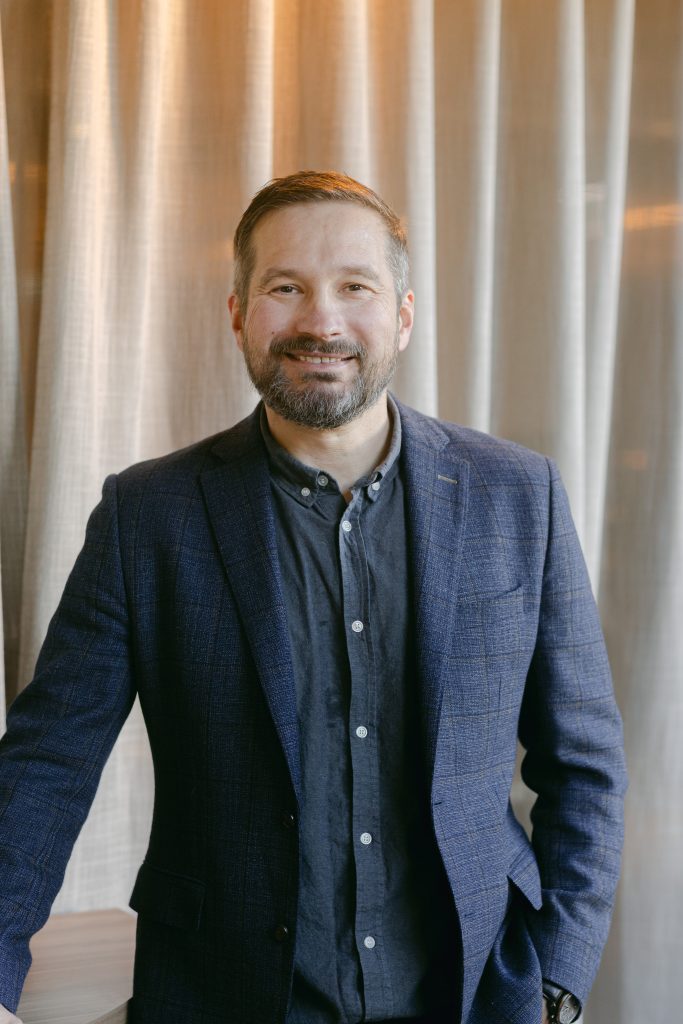
Leading that is Ed Seaford, Founder and Managing Director of Unphish.
Ed has spent more than 20 years working at the intersection of online brand protection, digital risk, domains and internet infrastructure.
Long before Unphish, he was already investigating online abuse, tracking bad actors and building technology to identify and disrupt threats targeting brands and their customers.
“Back in 2012 and 2013, I developed my first brand protection platform. We were scraping huge amounts of online data looking for impersonation, counterfeit products, fake websites and other forms of brand abuse. In many ways, we were trying to solve the same fundamental problem we are today: how do you find bad actors quickly, understand the extent of what they are doing, and disrupt them?”
What has changed dramatically is the scale and velocity of the problem.
When Ed built that first platform, the internet namespace was far smaller. It was before the first major wave of new gTLDs transformed the domain landscape. Today there are well over a thousand generic top-level domains, with another major expansion of the namespace now approaching.
But the number of places in which attackers can operate is only part of the story.
“The biggest difference today is velocity. AI, automation and Fraud-as-a-Service have completely changed the economics of online fraud. An attacker can create convincing websites, content, identities and entire campaigns incredibly quickly, and then replicate them at a scale that simply wasn’t possible when I started doing this.”
For Ed, that evolution has fundamentally changed what an effective brand protection platform needs to do.
“Fifteen years ago, we were scraping data and looking for needles in a haystack. Today, the haystack is exponentially bigger and someone has given the bad actors machines to manufacture needles. You can’t solve that problem by simply adding more people to monitoring teams. Detection, investigation and enforcement all have to become faster and more intelligent.”
The technology has changed enormously, but so has the way online abuse is investigated and enforced.
When Ed first started working in online brand protection, the industry was far less structured than it is today.
“It was a bit of a Wild West back then. Policies weren’t nearly as structured or formulaic as they are today. Sometimes getting something taken down meant working out who had control over it, finding the right person and being persistent until something happened.”
That environment suited Ed.
“I have always been pretty dogged when it comes to going after bad actors. Finding one fake website or counterfeit listing has never really been enough for me. I want to know who is behind it, what else they are operating, what infrastructure connects them and how much of it we can disrupt.”
That investigative mindset has been a constant throughout his career.
A malicious domain or website is rarely viewed in isolation. It is a starting point.
Domain registration data, DNS, hosting infrastructure, SSL certificates, IP addresses, email infrastructure, historical records and other OSINT sources can reveal connections that turn one suspicious property into an entire network of related activity.
“I love using every OSINT tool available to start joining the dots. If we find one property, I immediately want to know what else is connected to it. There is something incredibly satisfying about starting with one piece of information, following the trail and uncovering a much larger campaign.”
And once he finds it, the objective is straightforward: disrupt as much of it as possible.
“I’ve always enjoyed the chase. I can be pretty relentless when I know someone is targeting one of our clients or their customers. I want to identify as much of the infrastructure as we can and then work through every available avenue to get it removed.”
It is that combination of investigation, technology and enforcement that has kept Ed interested in the industry for more than two decades.
“I think the inquisitive and technical nature of this space really aligns with me as a person. I genuinely enjoy getting on the tools, digging into a problem and helping a client work out what is happening.”
That technical curiosity also explains his enduring interest in the infrastructure that underpins the internet.
“I’m definitely passionate about domain names, DNS and SSLs. It’s not something I get to confess much and a great way to kill a conversation at a party.”
It might not sound exciting from the outside, but that knowledge becomes extremely useful when investigating online threats. Domains, DNS, hosting, certificates and email infrastructure can all provide clues about how an attacker is operating and, importantly, how their infrastructure can be disrupted.
One misconception Ed wishes more organisations understood is that scams rarely happen in isolation.
“If a customer alerts you to a fake website, chances are you’re only seeing the tip of the iceberg.”
Behind one reported website might be other domains, phishing pages, social media accounts, email infrastructure or other assets that form part of the same campaign.
That is why finding individual threats is no longer enough.
“The mix of Fraud-as-a-Service and AI now lets attackers spin up highly convincing phishing sites in minutes and at scale.”
The economics have shifted heavily in favour of the attacker. Technology that once required specialist knowledge is increasingly available as a service, while generative AI can produce convincing copy, imagery, identities and other content almost instantly.
For businesses trying to protect their customers, Ed believes the response has to change accordingly.
“Traditional monitoring and detection tools aren’t keeping pace, and more scams are missed than found. To protect customers properly, businesses need technology that matches the speed and sophistication of the bad actors targeting them.”
This is one of the ideas at the centre of Unphish.
The objective is not simply to find more individual threats. It is to use technology to understand the relationships between them, investigate them faster and ultimately move from detection to disruption as quickly as possible.
Unphish was not born from a single lightbulb moment.
It evolved from listening to what clients and prospects were asking for, building processes around those problems and then developing technology to make those processes faster and more effective.
“The market asked for a service, so we created the processes first, and then developed the tool to support the service.”
From there, the focus moved increasingly towards automation, intelligent takedowns and finding more efficient ways to move from detection to disruption.
“Unphish wasn’t so much an idea, but a response to a need and a recognition that there is space for innovation and efficiency in this area.”
That philosophy has continued to shape product development.
Rather than building technology in isolation and then trying to find a problem for it to solve, the Unphish team has allowed client problems to help determine what gets built.
“In terms of development, we have let our clients guide us on the problems to solve and technology to build.”
For Ed, this keeps the platform grounded in real-world requirements.
“Most of Unphish has been designed around client problems and their heavy input. This approach has served us well to date, because problems are usually common across businesses and industries.”
The same technologies helping attackers operate at scale are also creating new opportunities for defenders.
For Ed, this is one of the most exciting aspects of building Unphish today.
“What I am most excited about at the moment with regards to Unphish is playing with different AI models that will take our platform to new heights.”
The opportunity is not simply to add AI as another feature. It is to rethink how large volumes of threat data can be analysed, how connections between seemingly unrelated properties can be identified, how investigations can be accelerated, and how enforcement can move closer to the speed at which threats are being created.
For Ed, that brings the story almost full circle.
Fifteen years ago, he was building technology to scrape large volumes of online data looking for brand abuse. Today, the fundamental objective remains surprisingly similar, but the scale of the internet, the sophistication of attackers and the technology available to both sides have changed enormously.
“The thing I love about this industry is that you have to keep adapting. I’ve always been inquisitive and technical by nature. I still love getting on the tools, following the OSINT trail, working out how things connect and finding the quickest way to disrupt them.”
Unphish is about taking that investigative mindset and giving it the technology to operate at the scale and speed of the threat organisations face today.
Despite running the business, Ed still finds it difficult to stay away when an interesting case lands on the team’s desk.
“I still love a good takedown.”
When a tricky or high-profile case comes in, he will often get involved.
“I roll my sleeves up when we get tricky or high-profile cases come in, and figuring out the best and quickest way to disrupt these scams or campaigns is still a rush.”
There is a particular satisfaction in starting with a single lead and gradually uncovering what sits behind it.
Sometimes that means following technical infrastructure. Sometimes it means finding connections between domains, websites, email or social accounts. Sometimes it simply means knowing which enforcement pathway is most likely to work and refusing to give up until it does.
For Ed, that practical involvement is important. It keeps him close to the problems Unphish is trying to solve and, importantly, close to the people using the platform.
When asked what has made him especially proud recently, however, Ed does not point to a particular investigation, takedown or product release.
He points to the team.
“I think I am proud of the commitment of the team.”
It is the consistency that stands out most.
“Not one specific event, but rather the consistency, reliability and quality of work our team delivers.”
That matters because trust is built over time. It is not something a business earns once and keeps automatically.
“We have worked hard to earn our clients’ trust, and this requires sustained and continual focus on the quality of our service.”
That focus on people also carries through to how Ed thinks about leadership.
He is quick to point to the leaders he has learned from throughout his career, including Joe Thymian, his first boss in the industry.
“Joe was my first boss in this space, and he is a leader who leads with compassion and honesty, which always makes you feel heard and supported.”
He also credits the leaders inside Unphish.
“Ivor has amazing organisation and control, which is something that has created great commercial structure within the business.”
For Ed, there is a common thread.
“The consistent theme in all of these great leaders is that they are genuinely good people who lead by example.”
It is something he tries to bring into his own leadership, while recognising that leadership is never really finished.
“I try to do the same, but I think being a good leader is an aspiration as opposed to a destination.”
“We are lucky to have great leaders within the business.”
Outside of work, Ed loves animals, describes himself as a nerd and has always been passionate about history.
These days, he is also more focused on health after a scare changed the way he operates, eats and exercises. His family is what keeps him grounded, and while he still loves good pasta and red wine, they are now more occasional treats.
“I have recently learned the value of staying healthy due to a scare that changed how I operate, eat and exercise.”
When asked about his favourite wine, Ed did not have to think too hard.
“Henschke is my fave wine, although I drink a lot less of it these days. Getting older, so need to look after my health. I still get a cheeky glass in from time to time.”
I can confirm the amount of cheekiness is in fact, not true.


He also loves a good pair of Jordans.
If he could only wear one pair for the rest of the year, the choice would be easy.
“That would be my Jordan IV OGs. Classic and comfortable.”
Apparently, there are more than a few pairs at home.
“I have too many Jordans, I get told by my wife. But it’s that or wine, so she is OK with the shoes now.”
Switching off does not always come naturally. Anyone who knows Ed knows he is usually working on something in the business, even when he is supposed to be resting.
His proper reset comes once a year.
“I get my trip in every year, so that is when I turn the phone off and reset.”
By the middle of the year, he is already counting down.
“I get to around May or June and really start to look forward to my July holiday.”
In many ways, Unphish is the latest chapter in something Ed has been working on for a long time.
The technology has changed. The volume of data has exploded. The internet namespace has expanded enormously. Attackers have become faster and more sophisticated, and AI and Fraud-as-a-Service are changing the economics of online fraud again.
But the underlying problem remains familiar.
Find the threat. Work out what is connected to it. Understand who and what sits behind it. Then disrupt as much of it as possible, as quickly as possible.
What has changed is the scale at which that now needs to happen.
The answer cannot simply be more people manually looking for more threats. The technology protecting organisations and their customers needs to evolve at the same pace as the technology being used against them.
That is what building Unphish looks like.
It combines decades of experience with a willingness to keep experimenting, investigating and improving. It means listening to clients, staying close to the problem and building technology around what is actually happening in the wild.
And for Ed, despite more than 20 years in the industry, that is precisely what keeps the work interesting.
There is always another trail to follow, another connection to uncover and, thankfully, still another good takedown to be had.