Cybersecurity Threats Across Every Digital Channel
Cyber threats continue to evolve across websites, domains, social media platforms, mobile applications, email, and other digital channels. Learn about the most common cybersecurity threats affecting organisations today and discover how proactive threat detection helps reduce risk before attacks impact your customers, operations, or reputation.
A cyber threat is any malicious activity, individual, or technique that attempts to compromise the confidentiality, integrity, or availability of digital systems, networks, data, or online services.
Cyber threats can take many forms, including phishing attacks, malware, ransomware, executive impersonation , social engineering, credential theft, and brand abuse. Their goal is to steal sensitive information, gain unauthorised access to a computer system, commit fraud, disrupt operations, or damage an organisation’s reputation.
Businesses, government agencies, healthcare providers, financial institutions, and critical infrastructure all face increasing cyber risks as attackers continue to adopt more advanced techniques. Understanding cyber threats is the first step towards building a stronger cybersecurity strategy and protecting your organisation, customers, and digital assets.
Cyber threats target organisations through many different channels and attack methods. While every threat is different, they often share the same objective: stealing information, impersonating trusted organisations, committing fraud, or exploiting customer trust.
Phishing
Phishing is one of the most common and effective cyber threats. It involves attackers impersonating legitimate organisations, websites, or communications in an attempt to steal credentials, payment information, or other sensitive data.
Phishing attacks may be delivered through email, SMS messages, fake websites, QR codes, social media platforms, or messaging applications. Modern phishing campaigns are increasingly sophisticated and often use convincing branding, AI-generated content, and social engineering techniques to increase success rates.
Executive impersonation occurs when cybercriminals pretend to be senior leaders, executives, or trusted employees to manipulate staff, customers, suppliers, or partners.
These attacks often involve fake email addresses, spoofed communications, cloned social media profiles, or fraudulent websites designed to create trust and urgency. Common objectives include financial fraud, credential theft, and unauthorised payments.
Investment scams are designed to trick individuals into transferring money into fraudulent investment opportunities. Attackers often impersonate legitimate financial institutions, investment firms, cryptocurrency platforms, or well-known public figures to build credibility.
These scams frequently leverage fake websites, social media advertising, messaging platforms, and phishing techniques to attract victims and create a false sense of legitimacy.
Brand abuse occurs when threat actors misuse an organisation’s brand, trademarks, reputation, or digital assets for malicious purposes. This can include phishing websites, counterfeit products, fake applications, fraudulent advertisements, domain impersonation, and unauthorised use of logos or branding.
Brand abuse can damage customer trust, create financial losses, and expose organisations to reputational harm if left unchecked.
E-commerce scams target online shoppers and retailers through fraudulent websites, fake online stores, counterfeit products, non-delivery scams, and payment fraud.
Cybercriminals often exploit trusted marketplaces and shopping platforms to deceive consumers into making purchases or providing payment information. These scams can result in financial losses for both customers and legitimate businesses.
Fake social media accounts are commonly used to impersonate brands, executives, customer support teams, influencers, or public figures. These accounts are often created to distribute scams, promote fraudulent offers, harvest credentials, or deceive customers.
Because social media platforms are widely trusted and heavily used, fake accounts can spread quickly and create significant reputational and customer harm before they are detected and removed.
Yes. Cyber threats are increasing in both volume and sophistication, making them one of the biggest risks facing organisations today. As businesses embrace cloud services, hybrid work, and AI technologies, cybercriminals continue to find new ways to target people, systems, and brands.
The Australian Cyber Security Centre received more than 84,000 cybercrime reports during FY2024–25, while the Office of the Australian Information Commissioner (OAIC) reported 1,113 data breaches in 2024.
The growing use of AI is also transforming the threat landscape, enabling more convincing phishing attacks, automated scams, and faster attack campaigns. According to IBM’s Cost of a Data Breach Report 2025, 97% of organisations reported experiencing an AI-related security incident without proper AI access controls.
As cyber threats continue to evolve, organisations need a proactive approach to threat detection, disruption, and response to protect customers, employees, and digital assets.
Why Choose Unphish to Protect You Against Cyber Threats
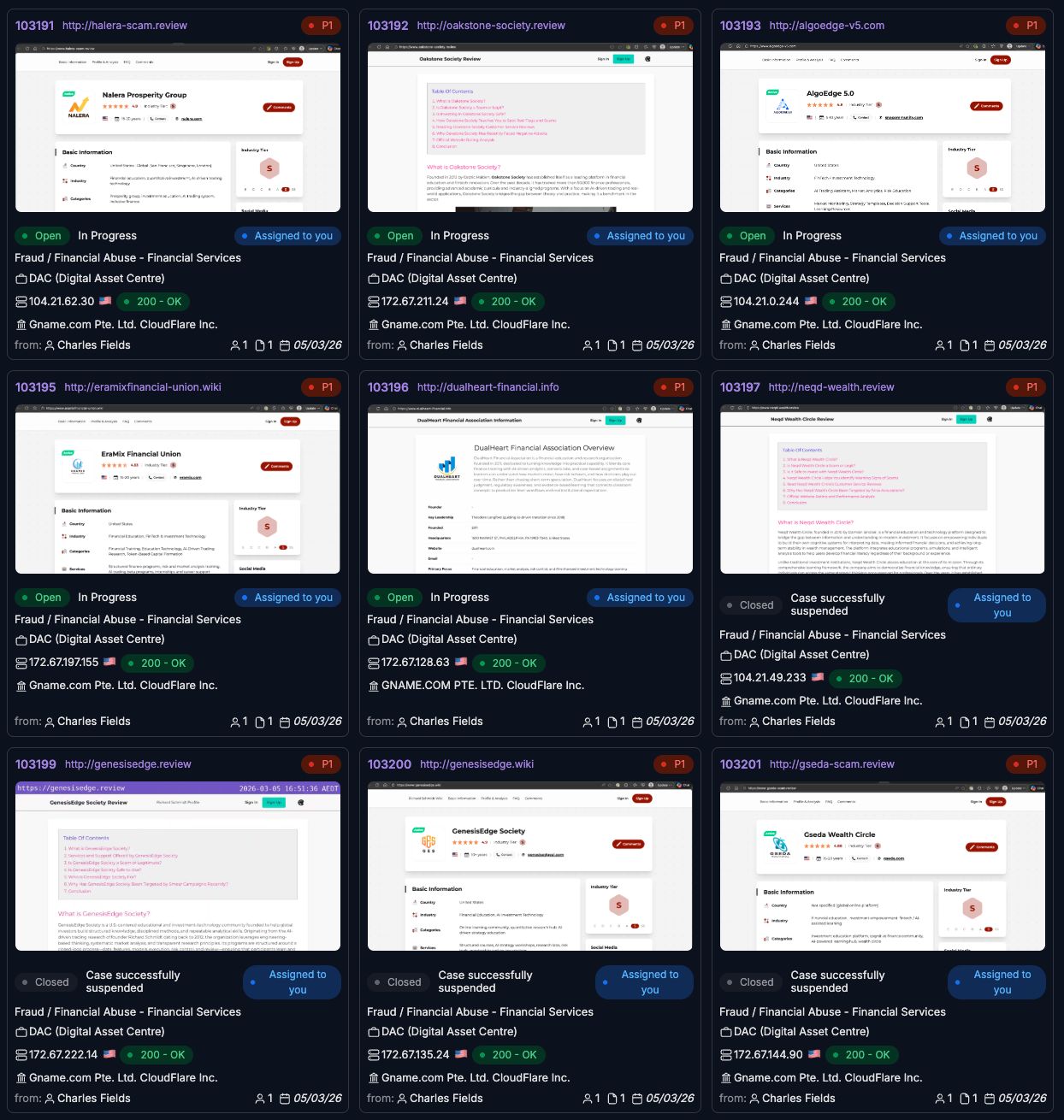
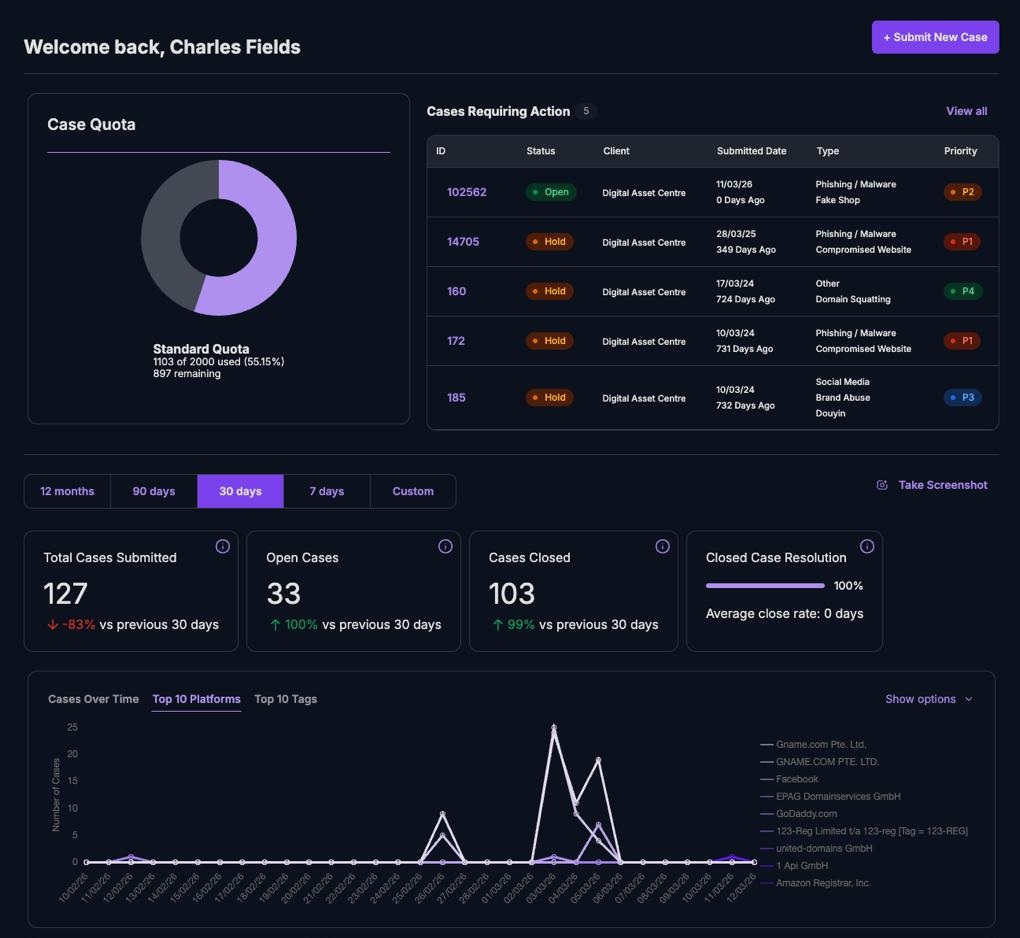
Cyber threats move quickly, and effective protection requires more than monitoring alone. Unphish combines advanced threat detection, expert analysis, and integrated enforcement workflows to help organisations identify, validate, and disrupt threats before they cause harm.
Automated Threat Detection
Unphish uses a multi-layered detection framework that combines threat intelligence, machine learning, behavioural analysis, and contextual AI to identify phishing campaigns, impersonation attempts, scam activity, and brand abuse across multiple digital channels.
Visibility Across Key Attack Channels
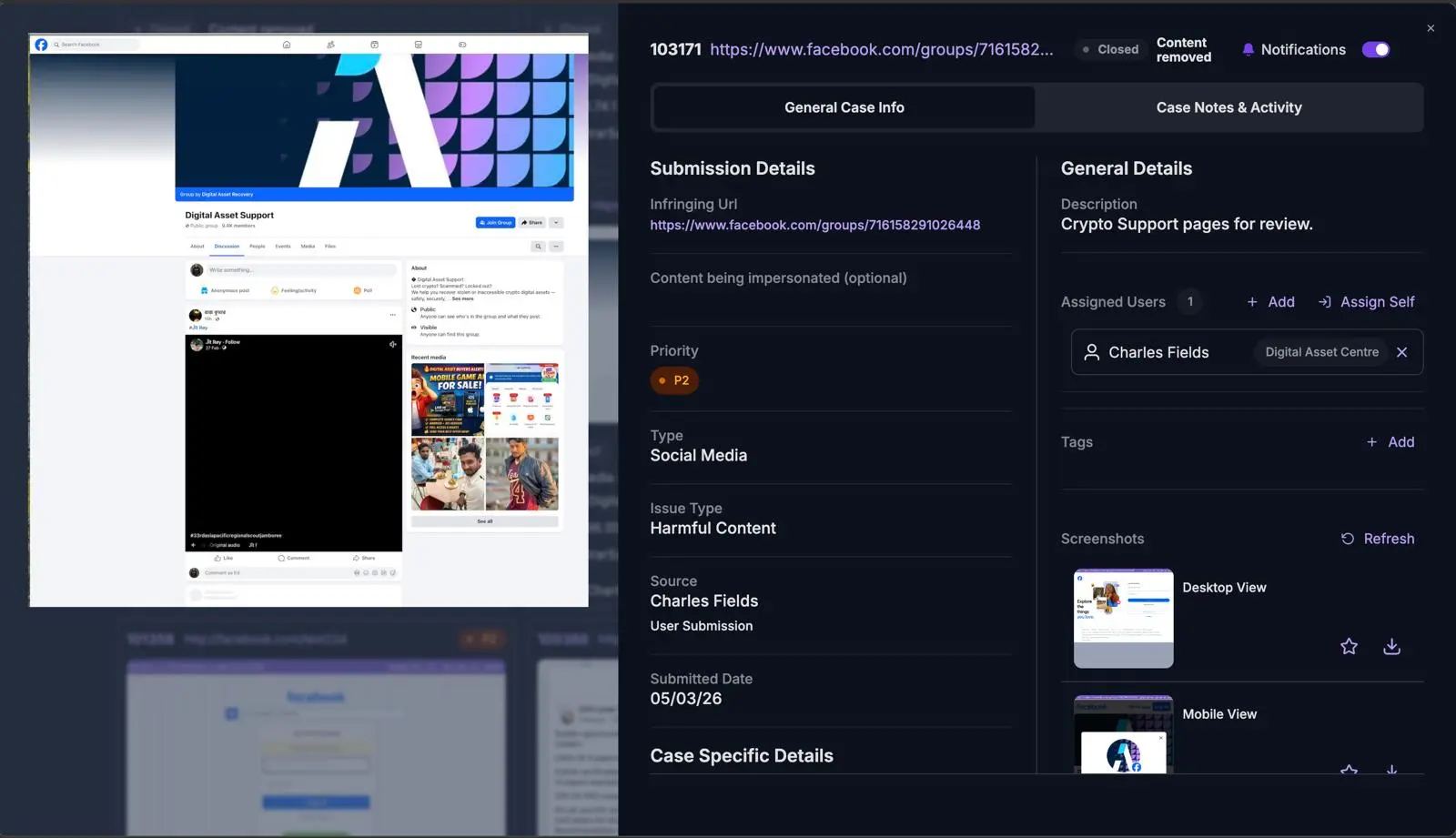
Threats no longer exist solely on websites and domains. Unphish monitors a wide range of channels, including websites, domains, social media platforms, mobile applications, and other online environments where cybercriminals target organisations and consumers.
Human-Led Threat Validation
While automation plays an important role in detection, experienced analysts review and validate threats before enforcement actions are taken. This helps reduce false positives and ensures organisations can focus on genuine risks.
Detection and Enforcement in One Platform
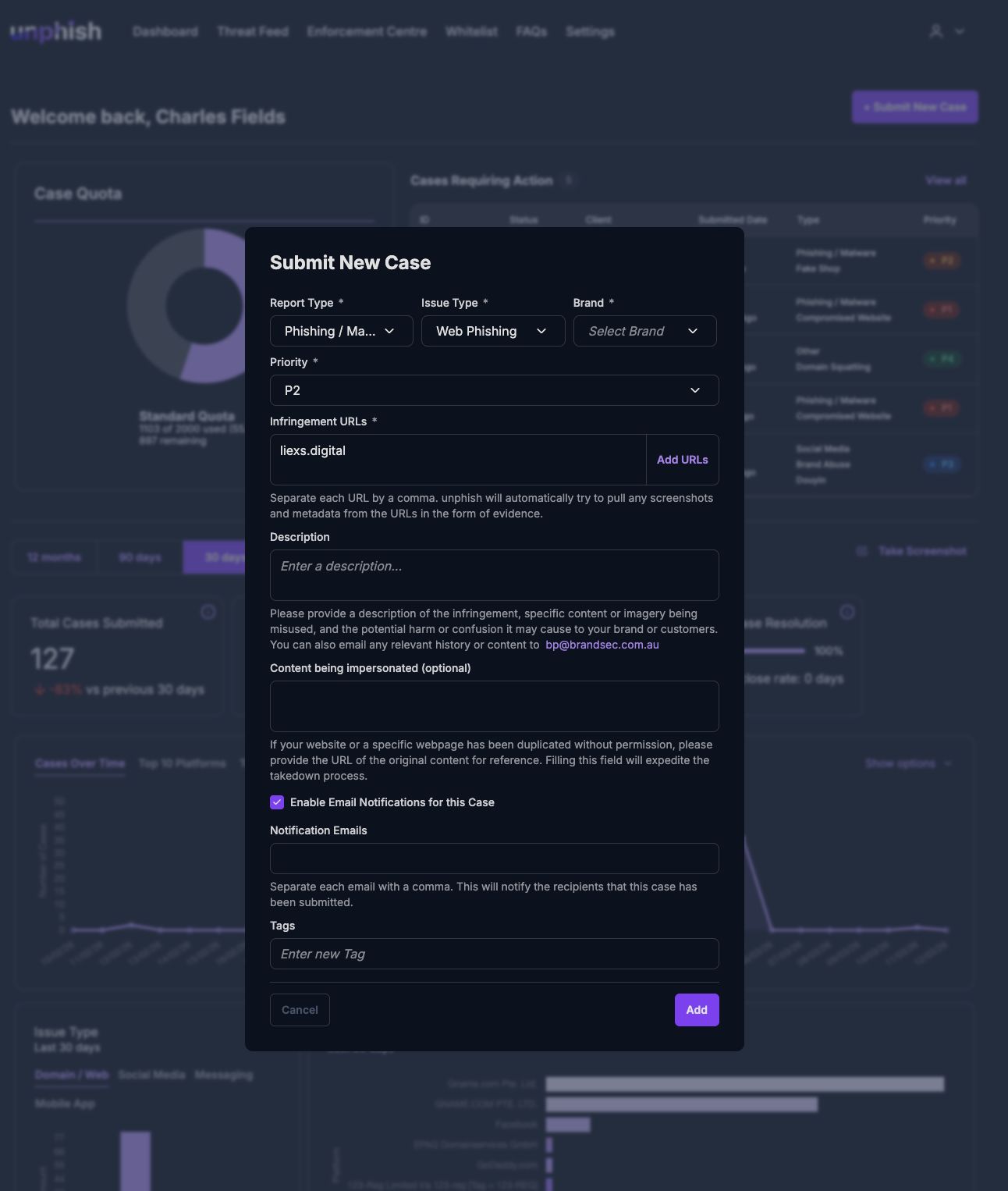
Identifying a threat is only the first step. Unphish streamlines the process from detection through to enforcement, helping organisations disrupt phishing websites, impersonation campaigns, fake social media accounts, and other malicious assets through a structured and measurable workflow.
* To learn more about our approach to threat detection and disruption, visit our Why choose Unphish page.
Unified Protection
Protect Every Digital Channel with Confidence
Cyber threats rarely target a single platform. They can appear across websites, domains, social media, mobile applications, and other digital channels at the same time.
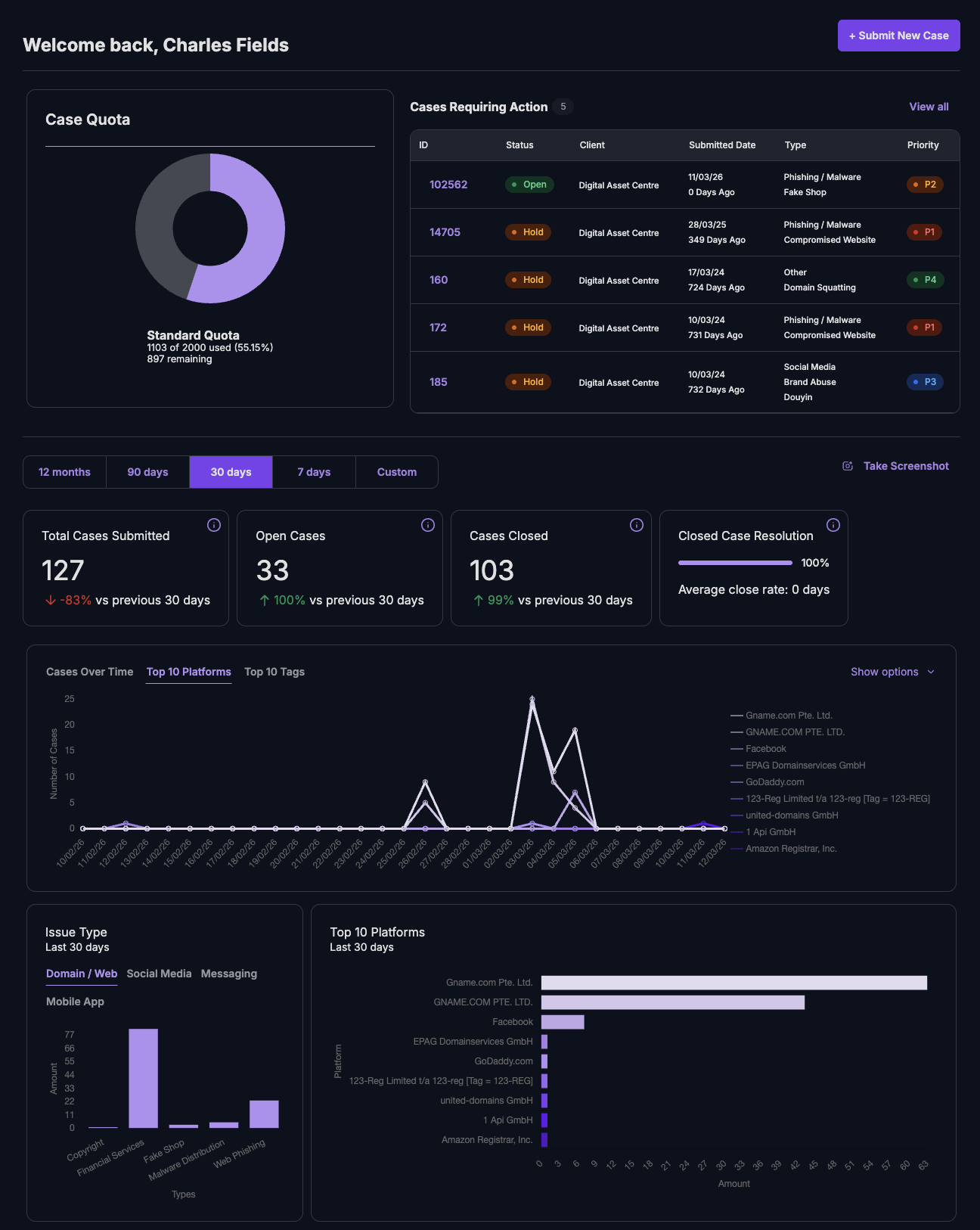
Unphish provides organisations with a unified approach to detecting, validating, and disrupting online threats before they impact customers, employees, or brand reputation.
See Unphish in Action
Protect your brand against cyber threats today
Detect, validate, and disrupt cyber threats before they impact your customers, employees, or brand. Discover how Unphish helps protect your organisation across every digital channel.