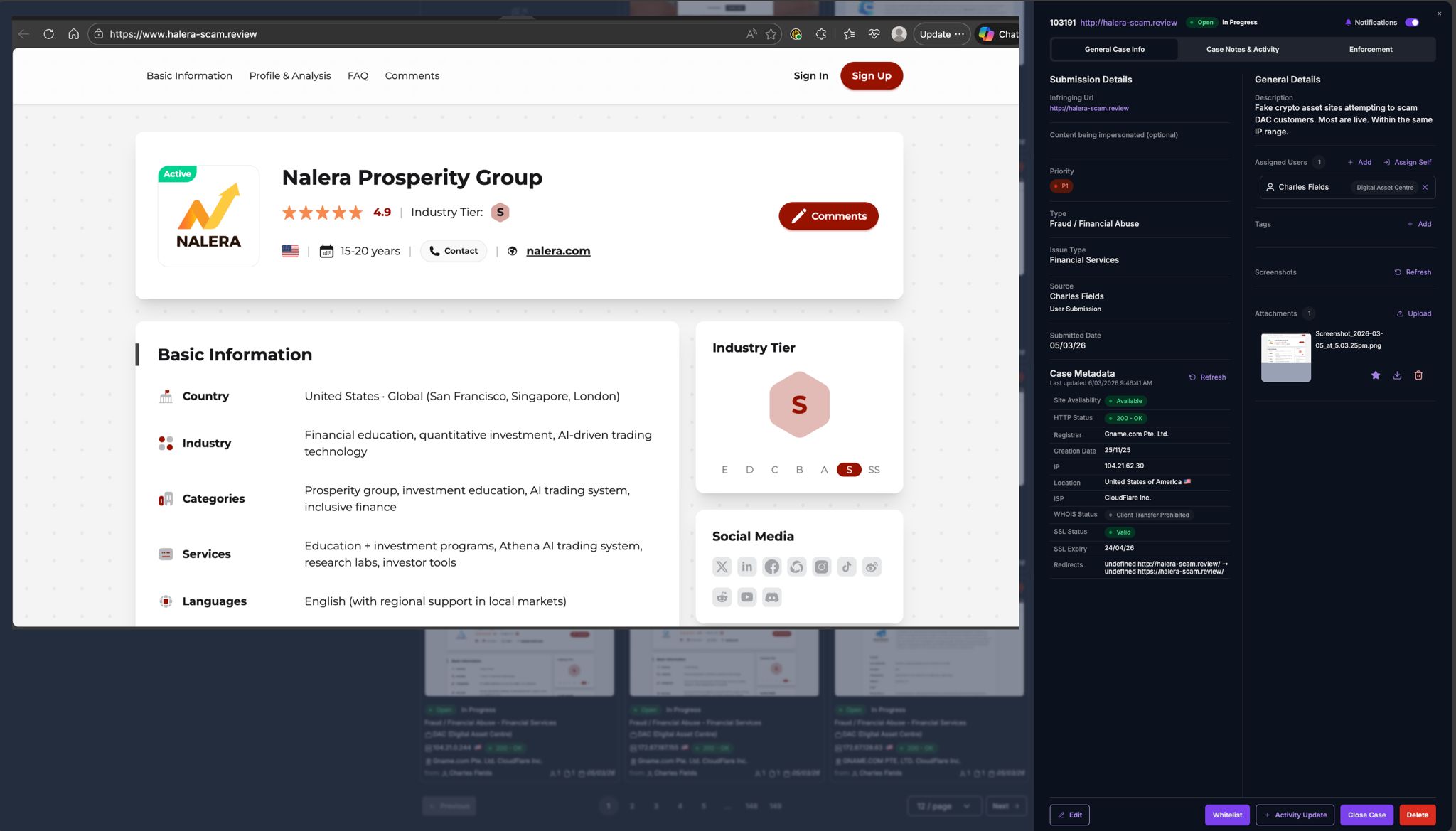
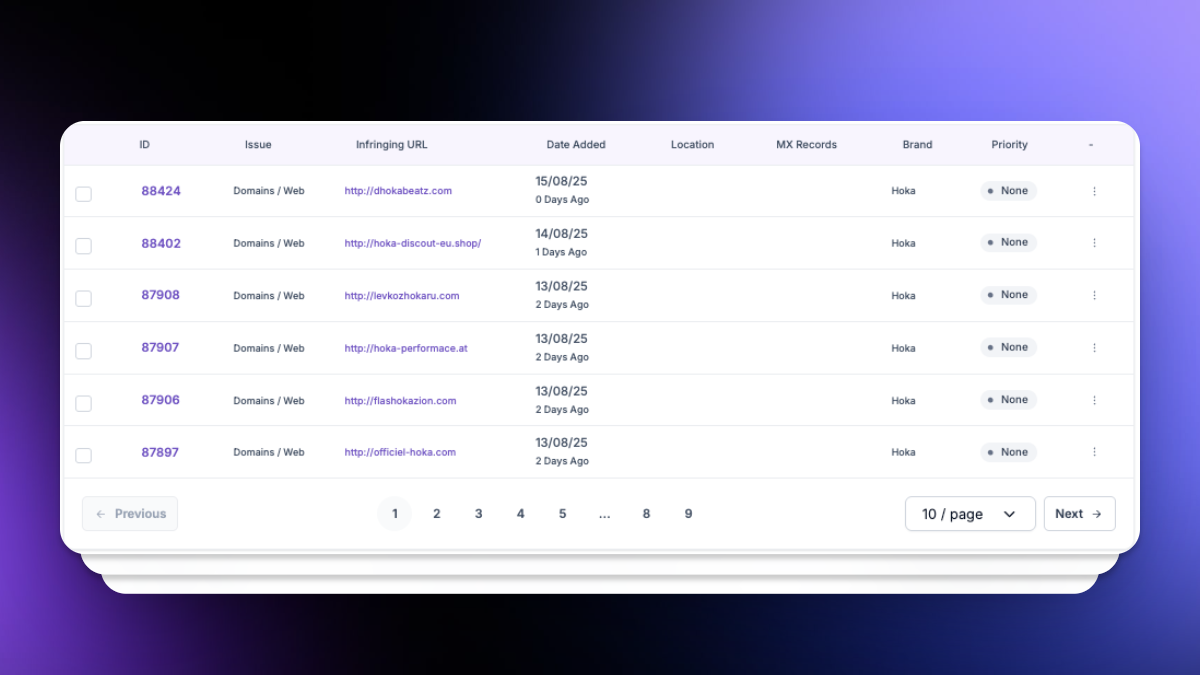
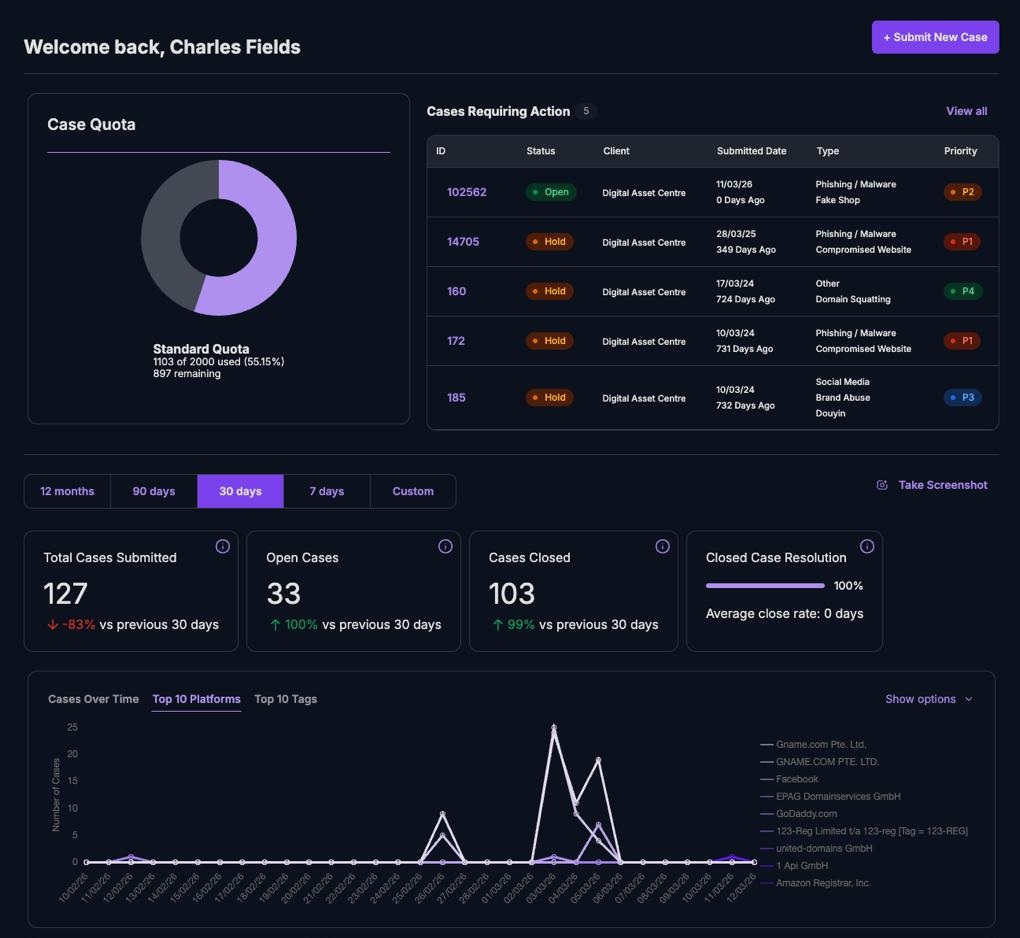
Unphish detects and disrupts unauthorised use of brand across domains, social platforms, and digital infrastructure, removing impersonation, fake services, and misleading content before they erode customer trust or brand value.
Brand abuse occurs when criminals exploit your organisation’s name, trademarks, products, or reputation to mislead customers and generate profit from trust you have built over time. It extends beyond traditional phishing and includes fake websites, impersonation accounts, misleading advertising, counterfeit services, and unauthorised digital content.
Unlike isolated phishing emails, brand abuse is persistent, distributed, and platform-driven. It often operates outside the visibility of traditional security tools, quietly eroding customer trust and brand equity.
Unphish enables organisations to continuously detect, prioritise, and disrupt brand abuse across domains, social platforms, marketplaces, and hosting infrastructure.
Brand Abuse Tactics
Common Forms of Brand Abuse
Brand abuse adapts to your industry, customer base, and digital footprint. Common examples include:
Lookalike Domains
Lookalike domains and websites impersonating official brand properties.
Social Impersonation
Fake social media profiles and posts using logos and brand identity.
Content Misuse
Unauthorised use of trademarks, product imagery, and marketing content.
Fraudulent Offers
Scam services, investment offers, or partnerships falsely presented as legitimate.
Operational Workflow
How Unphish Detects Brand Abuse
Unphish continuously scans for unauthorised brand use across domains, websites, social platforms, and related infrastructure. Detection combines automated brand recognition, infrastructure analysis, and intelligence correlation.
Step 1
Brand Monitoring
Monitoring for domain registrations and web assets using brand keywords, trademarks, and visual identifiers.
Step 2
Evidence Collection
Detection of cloned or misleading websites that replicate official branding and content.
Step 3
Enforcement
Identification of impersonation across social media, marketplaces, and advertising platforms.
Step 4
Infrastructure Analysis
Analysis of campaign infrastructure to uncover related abuse and repeat offenders.
Step 5
Reporting and Oversight
Correlation of internal referrals and external intelligence to improve detection accuracy.
Why Unphish
Why Customers Choose Unphish
Unphish turns fragmented, reactive threat response into a single, automated workflow. Faster detection, consistent takedowns, full visibility.
Unphish
Fragmented / Reactive Approach
Threat Visibility
Continuous monitoring across domains, hosting, social platforms, and attacker infrastructure.
Limited visibility based on complaints or isolated alerts.
Detection Speed
Automated detection and risk scoring identify threats early.
Threats are discovered late, often after impact.
Infrastructure Insight
Deep analysis reveals campaign links, infrastructure reuse, and attacker patterns.
Little or no visibility into shared infrastructure or repeat activity.
Enforcement Execution
Coordinated workflows enable faster, consistent takedown across platforms.
Manual submissions slow down response and create inconsistent outcomes.
Verification & Control
Automated validation confirms removal and tracks reappearance.
No structured verification or monitoring after takedown.
Operational Visibility
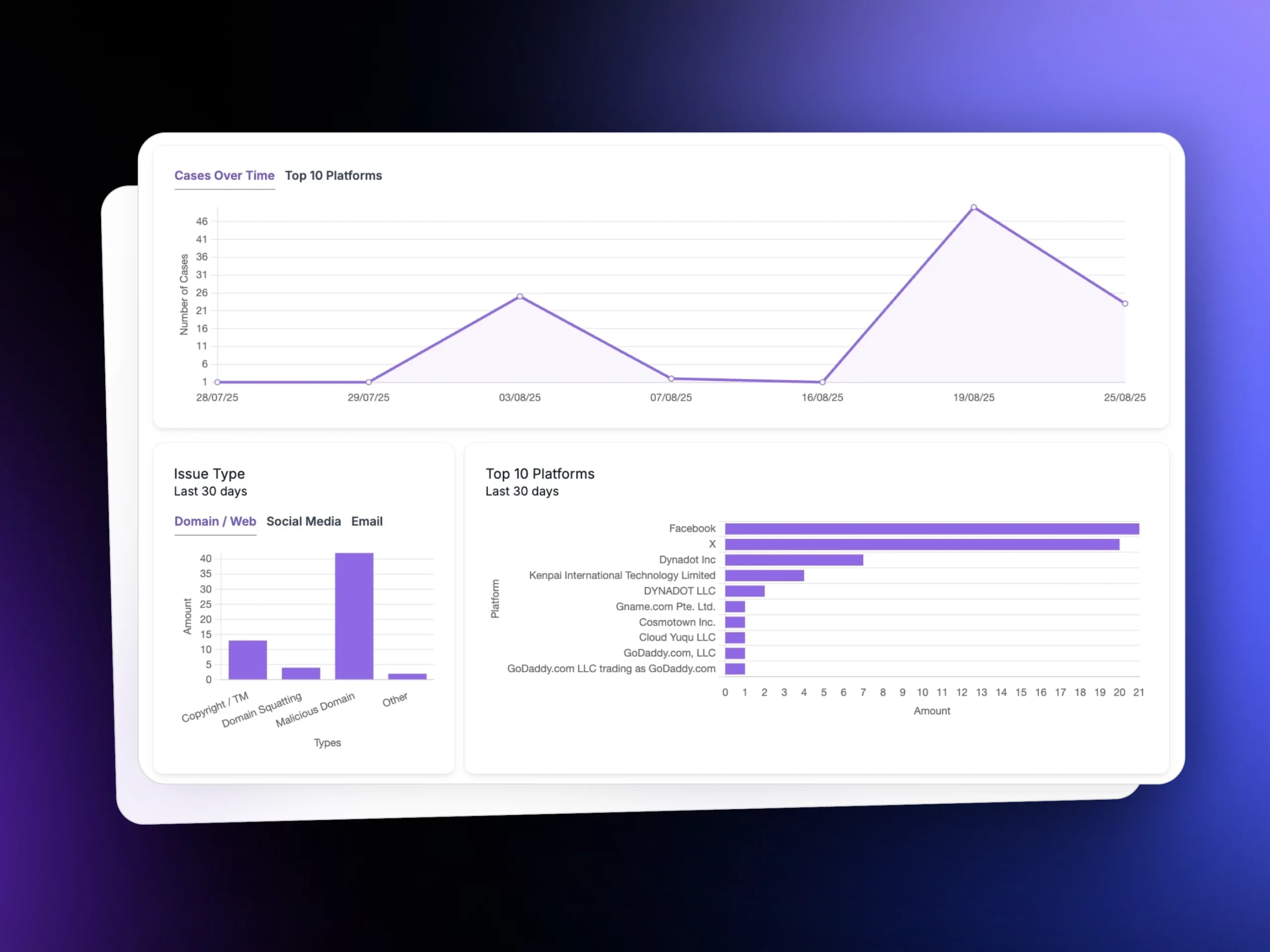
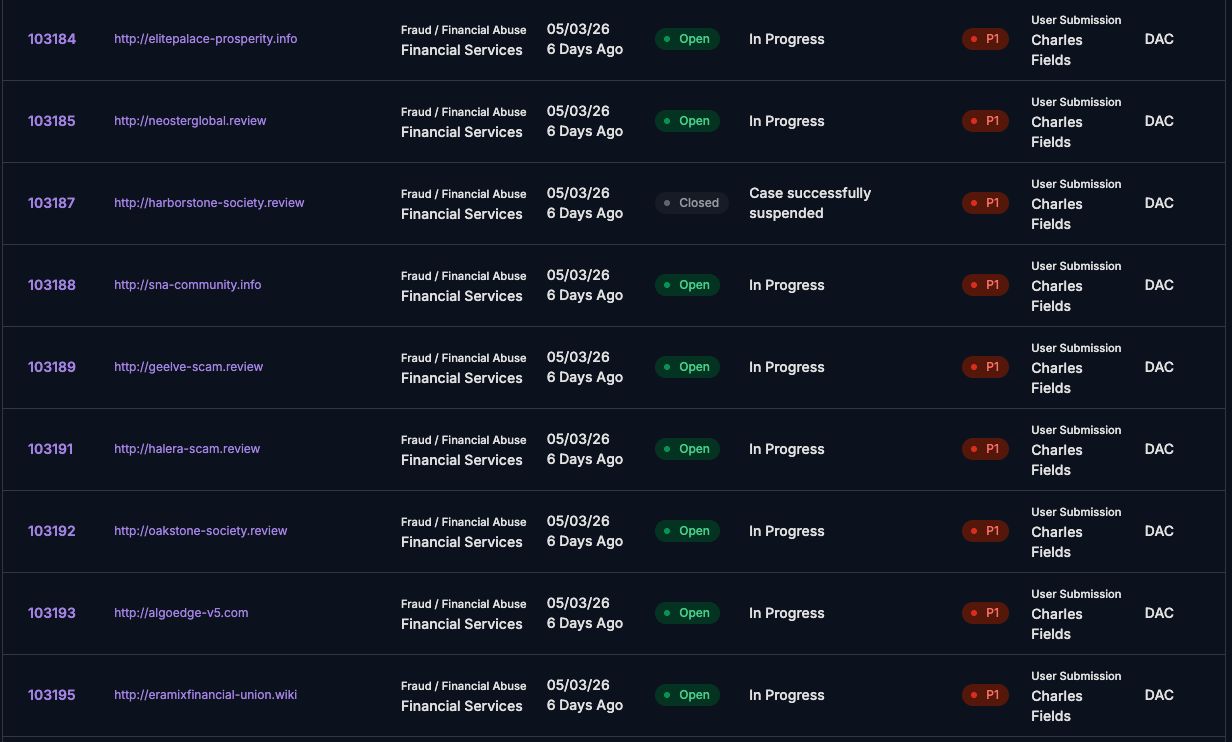
Unified dashboards provide clear status, timelines, and reporting.
Siloed tools limit visibility and create operational gaps.
How Unphish Enforces and Remediates Brand Abuse
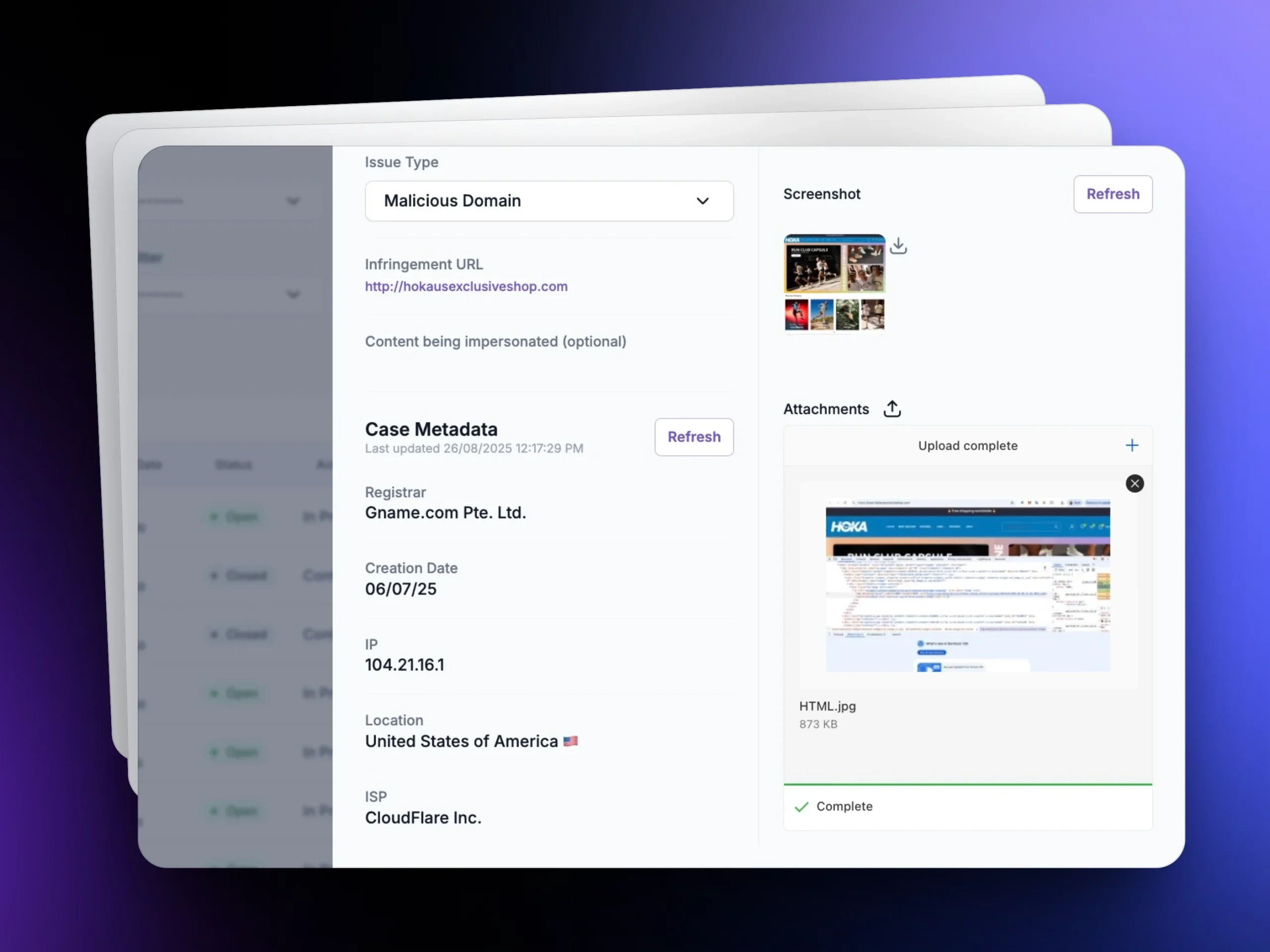
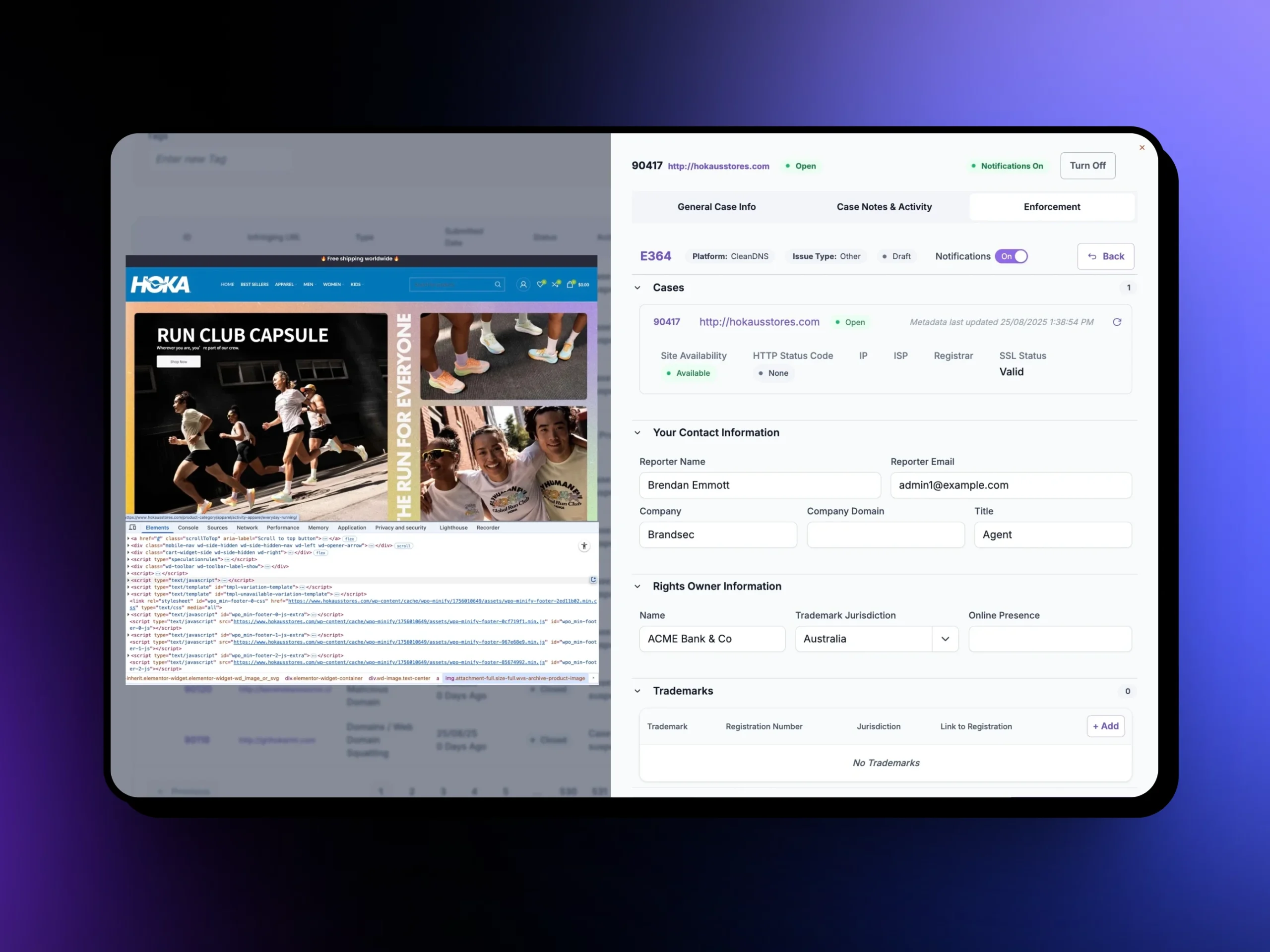
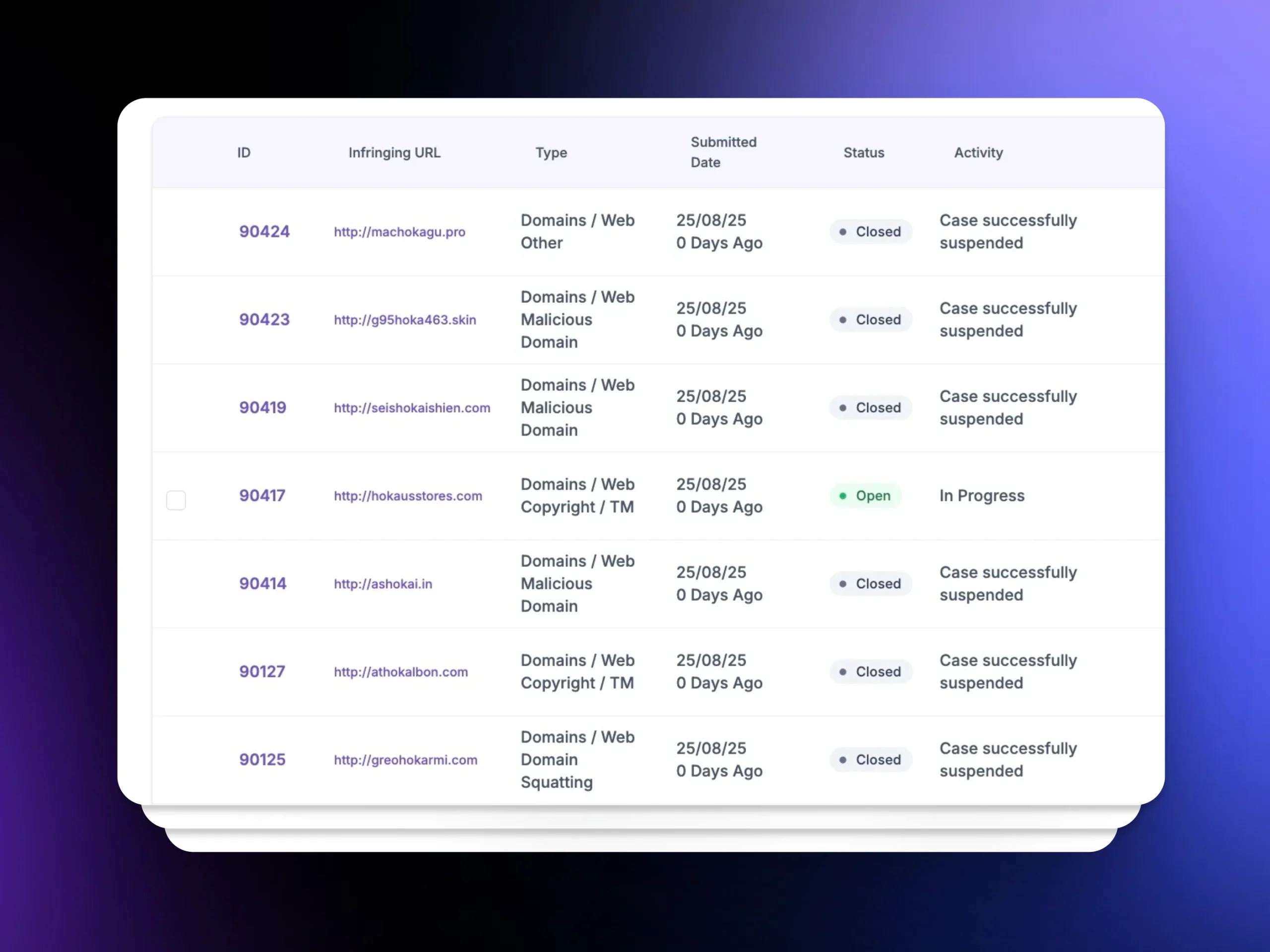
Unphish integrates enforcement directly into the platform, allowing organisations to move from identification to remediation without delay. For every brand abuse incident, the platform automatically collects and preserves enforcement-ready evidence, including visual captures, hosting information, domain data, and platform-specific artefacts. This enables efficient and defensible takedown actions across registrars, hosting providers, social platforms, and digital services.
Enforcement Actions
Enforcement actions may include
Unphish enables rapid enforcement actions to remove abusive assets and disrupt ongoing brand abuse.
Impersonation Website Takedown
Takedown of impersonation websites and fraudulent services
Infringing Domain Suspension
Suspension of lookalike or infringing domains
Fake Social Profile Removal
Removal of fake social media profiles and pages
Repeat Offender Escalation
Escalation of repeat offenders using shared infrastructure or assets
Why Brand Abuse Protection Matters
Brand trust is a strategic asset. When customers encounter fake websites, misleading ads, or impersonation accounts, the impact extends beyond a single incident and undermines long-term confidence.
Unphish reduces the visibility and lifespan of brand abuse campaigns, protects customers from deception, and provides compliance, legal, and risk teams with auditable records of action taken.
By treating brand abuse as an ongoing operational threat rather than isolated incidents, Unphish enables organisations to defend their digital presence with consistency, speed, and measurable disruption.
FAQs
Key questions about how Unphish detects, investigates, and disrupts brand abuse across digital channels.
1. How quickly can brand abuse assets be removed?
Once an incident is verified, Unphish initiates enforcement actions with the relevant registrar, hosting provider, or platform. Removal timelines vary by provider, but high-risk cases are prioritised to minimise customer exposure and brand damage.
2. Does Unphish detect abuse across domains, websites, and social platforms?
Yes. Unphish continuously monitors domains, websites, social media platforms, marketplaces, and related infrastructure to identify impersonation, cloned content, and other forms of brand abuse.
3. Can enforcement actions be prioritised based on brand risk?
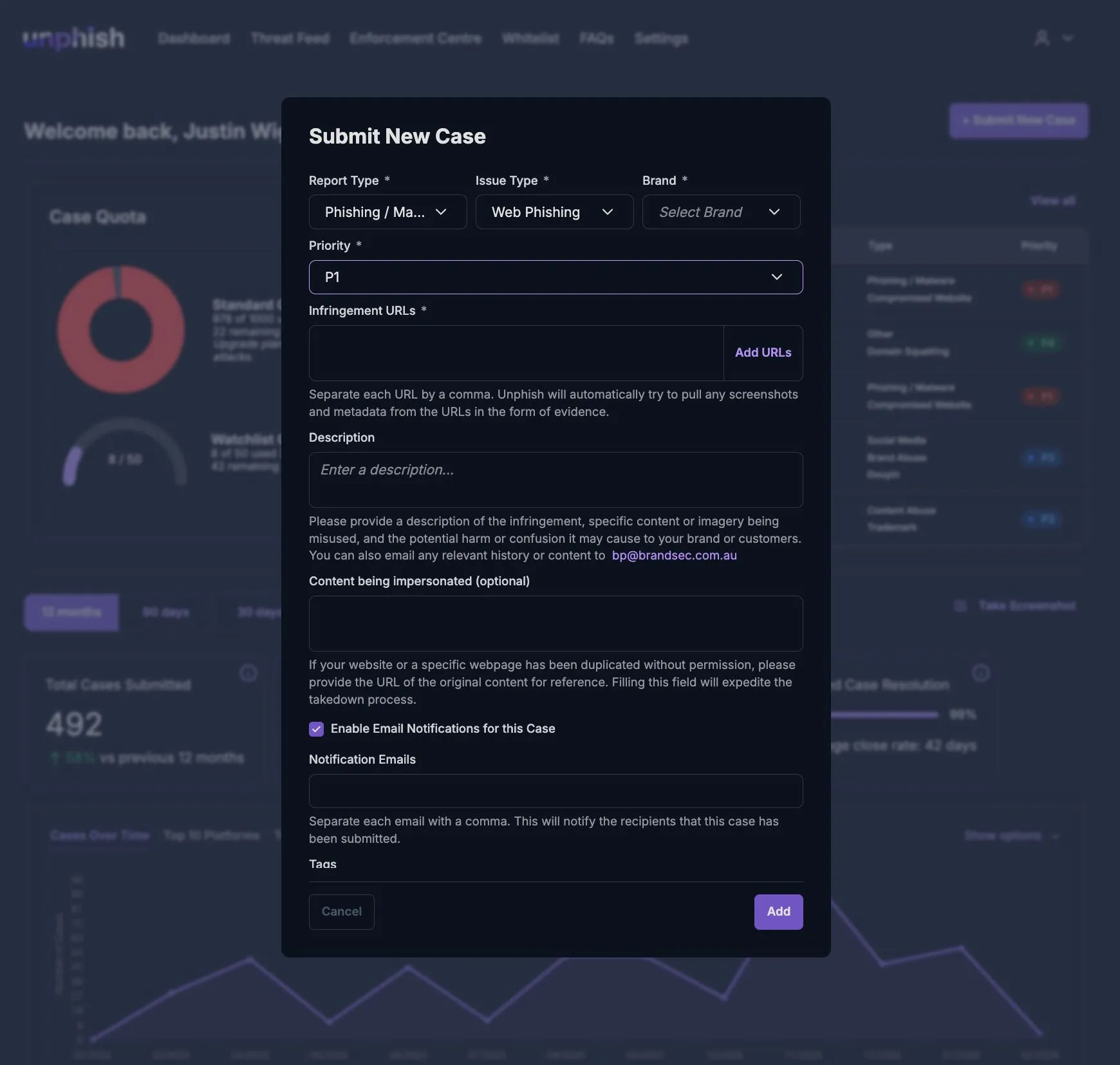
Yes. Cases can be prioritised based on factors such as customer exposure, brand impact, geographic relevance, or strategic importance, ensuring the most harmful threats are addressed first.
4. How does Unphish identify coordinated or repeat brand abuse campaigns?
Unphish analyses shared infrastructure, domain patterns, hosting relationships, and behavioural indicators to identify coordinated campaigns and repeat offenders, enabling faster disruption and escalation.
Take Action
Stop Brand Abuse Before It Spreads Across Your Digital Channels
Move beyond detection and take decisive action to remove impersonation assets and disrupt ongoing brand abuse across digital channels.