

On Monday, 28 September, we took a major step forward at Unphish, moving our clients across to the latest version of our platform.
For the Threat Operations team, this was much more than a new interface. It represents a significant change in how we investigate, manage and enforce against online threats on behalf of our clients.
As with any major platform release, there were a few initial bugs to work through. But overall, the transition went smoothly, and the team is now settling into the new workflows and starting to see the benefits of the platform day-to-day.
A clearer way to manage threats
The most immediately noticeable change is the new user interface.
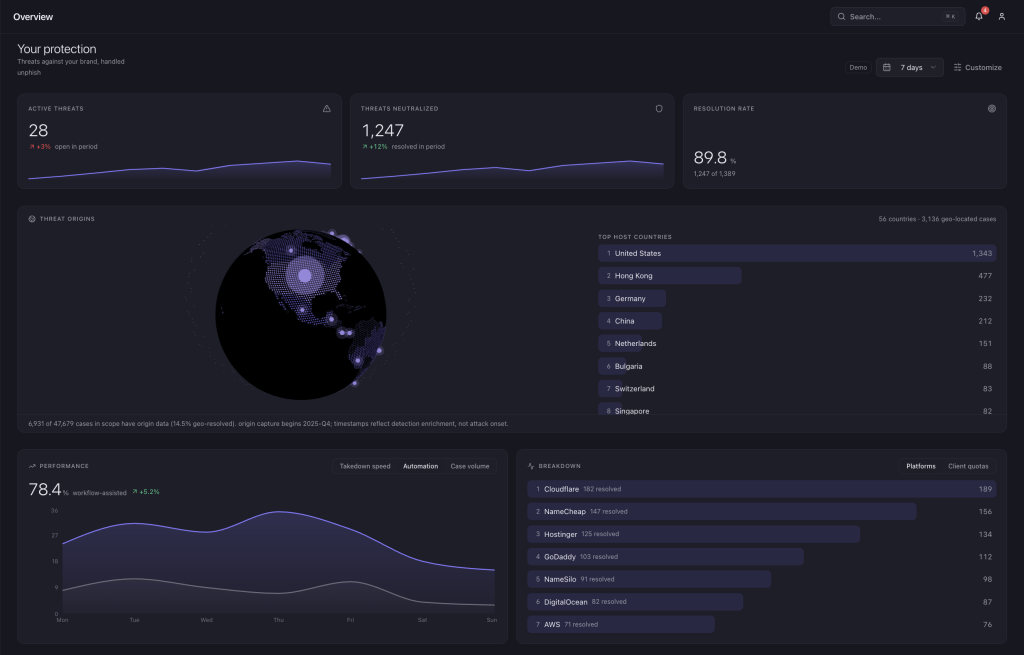
While a fresh design is great, what matters to us operationally is what sits behind it. The new platform gives analysts much clearer visibility over what needs to be reviewed, actioned or followed up, as well as where we need additional input from a client.
That makes it easier for our team to prioritise work and manage cases throughout their lifecycle.
We’ve taken the same approach to the client experience. Cases requiring input are much easier to identify, giving clients greater visibility of where we need their assistance while allowing our Threat Operations team to continue managing the investigation and enforcement process.
Making enforcement more efficient
One of the biggest operational improvements is enforcement.
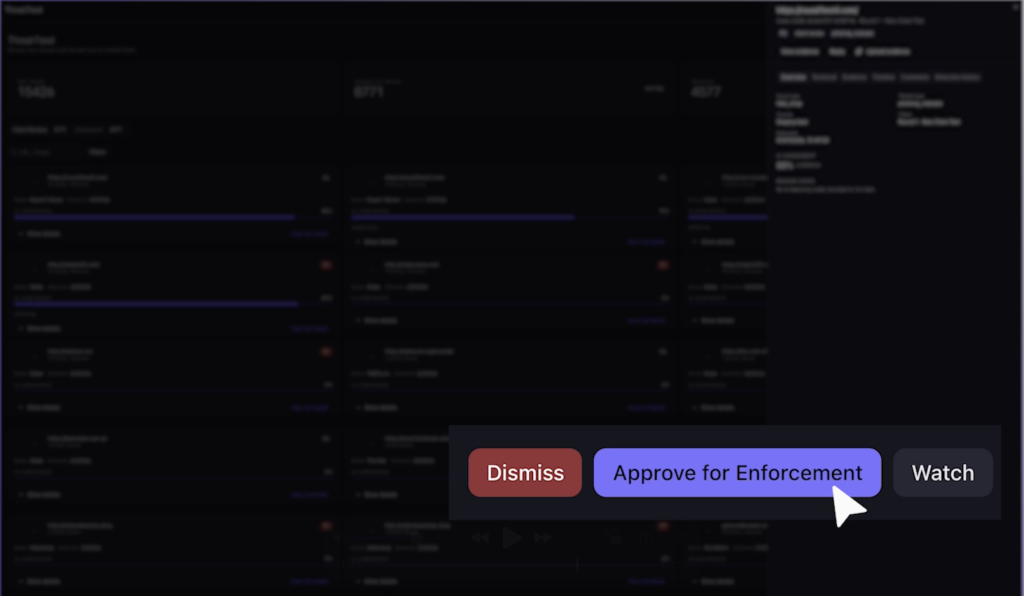
Many enforcement actions can now be initiated directly through the Unphish platform. Bringing more of this process into a single workflow reduces unnecessary manual steps and allows our analysts to move from identifying a threat to taking action against it more efficiently.
For clients, the goal is simple: less friction between detection and action.
There will always be cases that require additional investigation, unusual enforcement routes or direct engagement with platforms and providers. By making the standard parts of the process more efficient, our analysts can spend more of their time on exactly those types of cases.
Building a platform that keeps improving
We’re still refining the platform, and that’s intentional.
Since launch, we’ve been working through feedback from our analysts and clients, tuning detection sources, improving workflows and addressing issues as they arise.
One of the things I’m most excited about is how quickly we can now iterate. AI-assisted development is helping us test and deliver fixes and improvements much faster than was previously possible, in some cases moving from an operational issue or idea to testing and deployment within days.
That gives us an opportunity to build the platform around how our analysts and clients actually use it, rather than treating the September release as the finished product.
The next step: AI-assisted Threat Operations
The next stage is particularly exciting for our team.
We’re beginning the process of teaching and validating AI against more of our Threat Operations workflows.
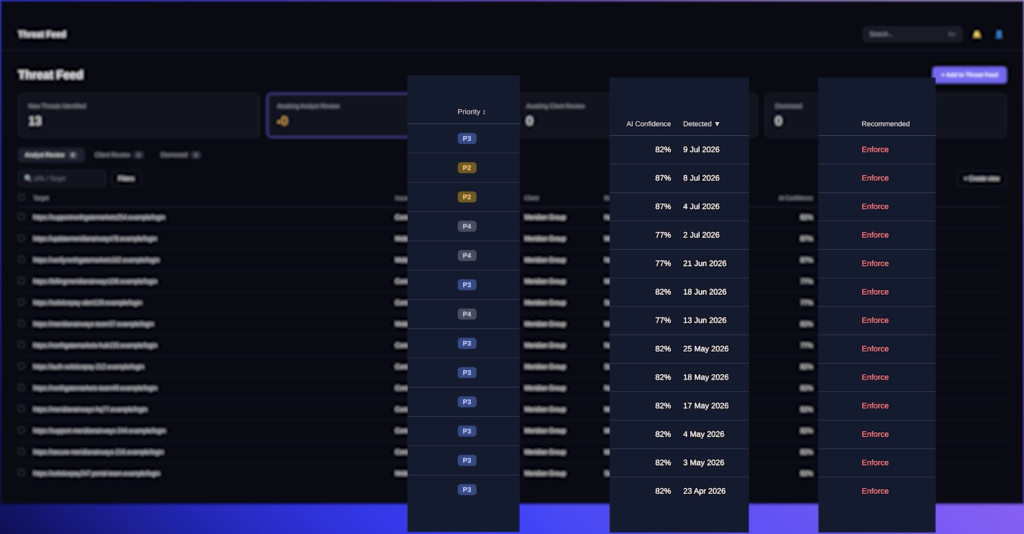
This isn’t about removing analysts from the process. Effective threat investigation and enforcement often requires context, judgement and experience, particularly when dealing with unusual threats or non-standard takedowns.
Instead, we see AI taking on more of the repetitive analysis and workflow activity that currently consumes analyst time.
Getting there will take time. It requires careful training, testing and validation before we’re comfortable automating any part of an operational process.
But as those capabilities mature, they should allow us to handle a much broader volume and range of threats while keeping our analysts focused on the areas where they provide the most value: investigating complex cases, navigating difficult enforcement scenarios and supporting our clients.
This is Just the beginning
We’re only a few weeks into this next chapter of Unphish, and there is plenty more to come.
I expect the way our Threat Operations team works six months from now will look considerably different to how we operate today.
What won’t change is the objective: identify threats earlier, make it easier to take action against them and give our clients confidence that someone is actively looking after their brands online.
We’re keen to hear from our clients as we continue building. The more feedback we receive about what’s working, what isn’t and what would make the platform more useful, the better we can make it.
The new platform gives us the foundation. Now the exciting part is seeing what we can build on top of it.