
Inside the Two-Layer Ticket Scam Built to Survive Takedowns
The more capable fake ticket operations now split the scam across two separate layers of infrastructure. Here's how it works, why takedowns struggle and how to dismantle it.
Tickets have never been harder or more expensive to get. Whether it's a favorite artist, sports team, comedian or exhibition, events routinely sell out within minutes of going on sale, leaving most fans empty handed.
When a major fixture sells out, demand moves elsewhere. Fans who missed the official sale start searching for resale options, and within days a familiar pattern appears. Lookalike domains carrying the organizer's name, offering seats that were never theirs to sell.
Fake ticketing sites have been around as long as online ticketing. The more capable operations now split the scam across two separate layers of infrastructure, and that design is aimed squarely at the people trying to take them down.
Why Ticketing Works So Well for Scammers
Ticketing gives a scammer almost everything they need. Scarcity creates urgency. Resale is a normal part of the market, so an unofficial site doesn't immediately raise suspicion. Event fixtures and calendars are published months in advance, which lets campaigns be planned around peak demand. And fans fully expect to enter card details at checkout quickly, so nobody else grabs the seats first.
The Lure and the Conversion Layer
The first layer is the lure, which we often label as the seeding layer. This is the brand-specific storefront, a domain such as tickets-[brand].com, complete with fixture lists, seat maps, pricing and a working cart. It draws traffic from search, social media and paid ads, and earns enough trust to get a fan to checkout. Nothing is harvested here.
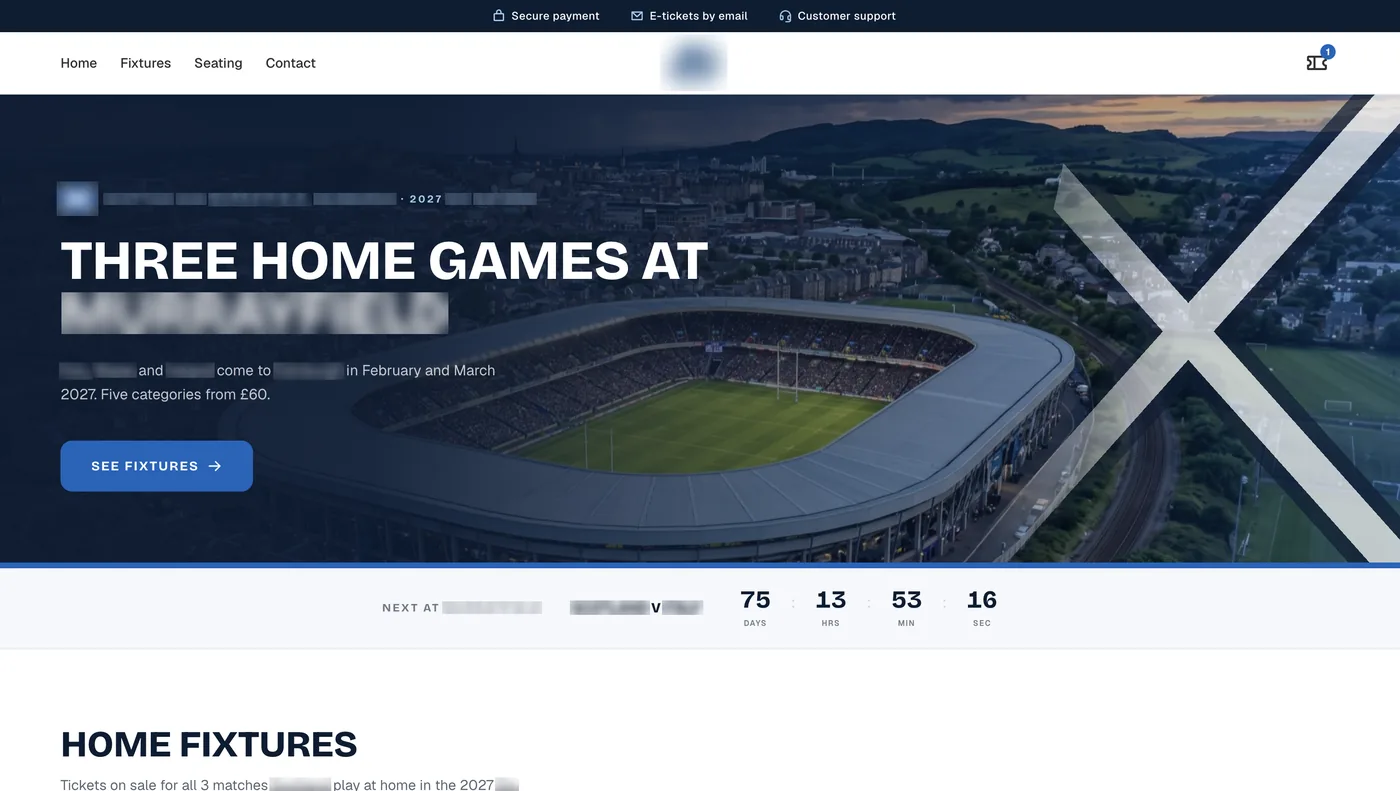
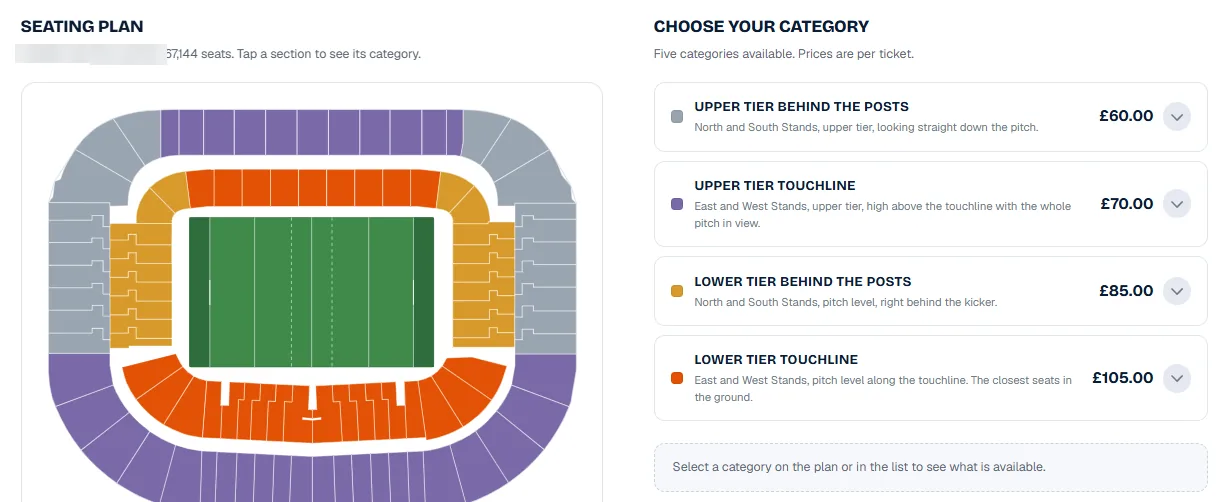
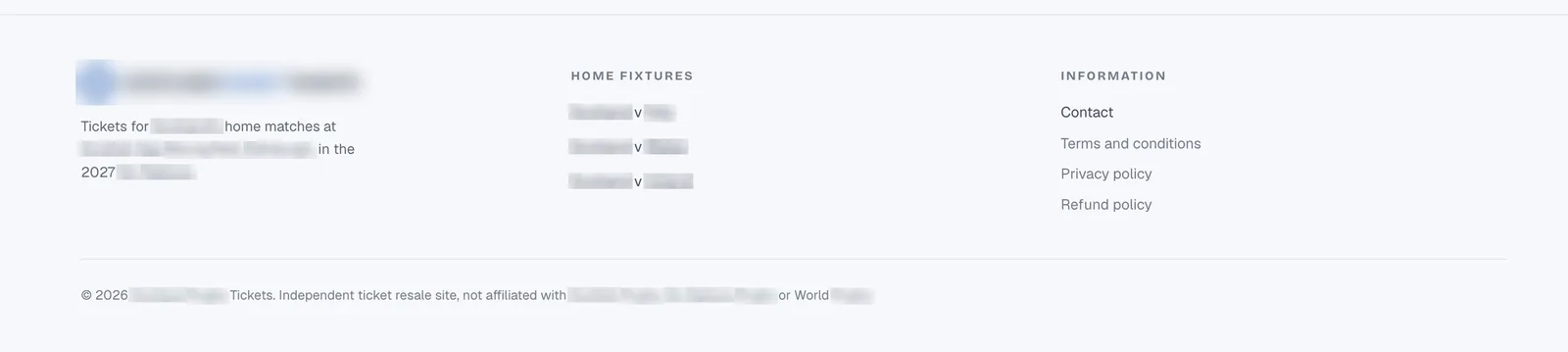
The lure in this example has everything a fan would expect from a real resale site, down to a match countdown, a seating plan with five price categories and a footer calling itself an independent resale site.
The second layer is the conversion layer. When the victim proceeds to payment, they are redirected to a separate, generic-looking domain, something like secure-authpay[.]xyz/checkout. This is where card details are captured, on a page carrying none of the brand's imagery or identity.
tickets-[brand].com- Uses the brand name, imagery and fixtures
- Seat maps, prices and a working cart
- Draws traffic from search, social and ads
- Collects nothing
secure-authpay[.]xyz/checkout- No brand name or imagery at all
- Captures card details
- Only loads inside a victim's session
- Shared by many lures at once
Splitting the operation this way separates the brand abuse from the fraud. The domain using your brand contains no evidence of phishing. The domain doing the phishing doesn't use your brand, and it is very difficult for anyone outside the scam to see.
A Payment Page Only Victims Can See
The conversion layer is typically gated. It only renders for a visitor who arrived through the lure in the same browser session. Common mechanisms include session tokens or cookies set on the storefront, checks on the referring page, and one-time checkout URLs that expire after use.
Open the same payment URL in a private window, another browser or another device and it returns a blank page, an error or something harmless. Many kits add further filtering, such as geo-fencing so the page only loads for visitors in the target country, bot detection, and blocklists of IP ranges belonging to data centers and security vendors.
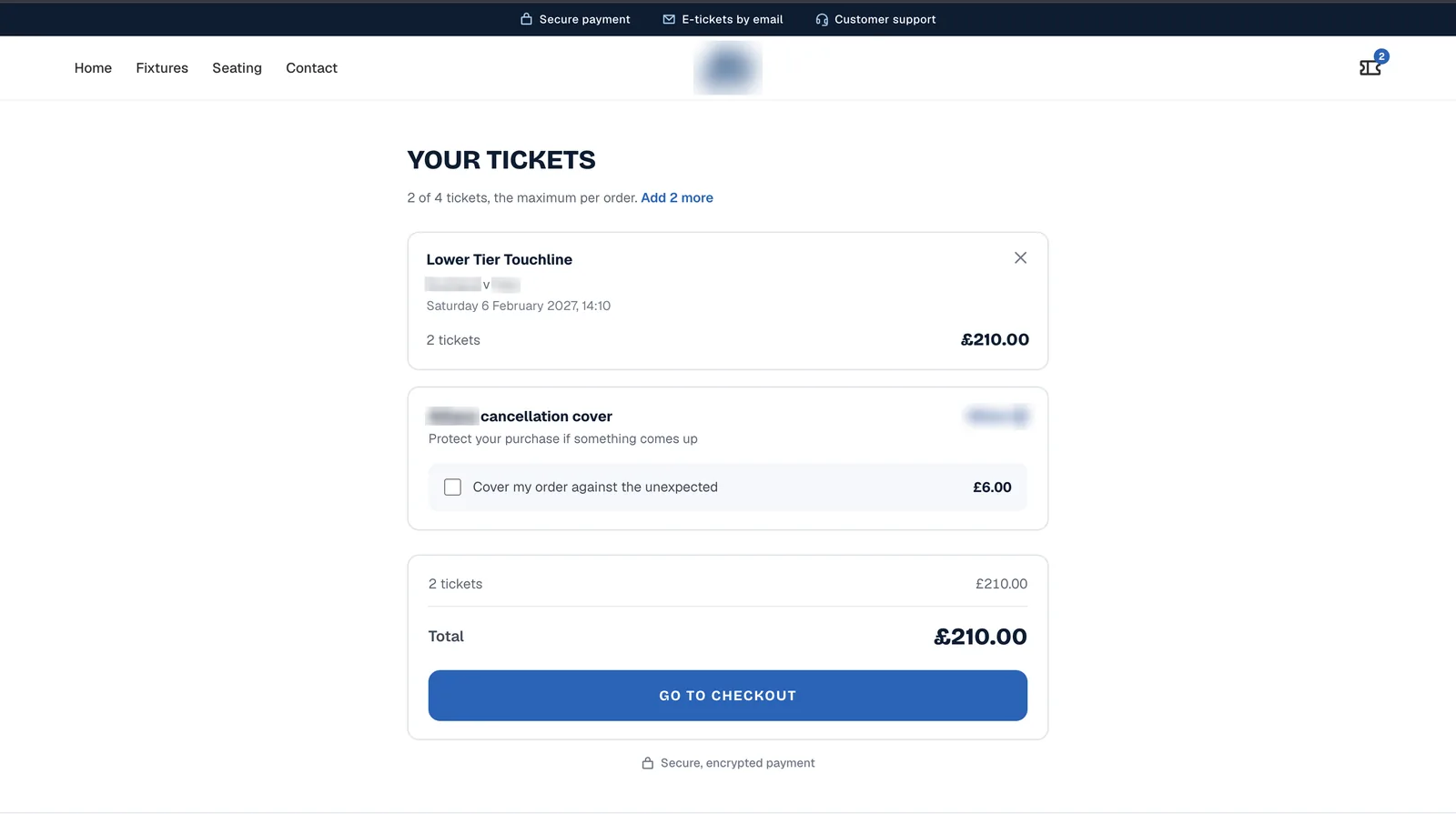
That's exactly what happened when we looked at the example above. The storefront, seat map and cart all worked, but the checkout button returned an error because the payment page wouldn't load for us.
The scanners, crawlers and abuse desk analysts who would normally verify a report see nothing.
One Backend, Many Brands
In the campaigns we monitor, conversion domains rotate frequently, and looking under the hood of these operations explains why.
A single conversion layer usually sits behind many lures, each targeting a different brand, event or industry. When a conversion domain is reported or blocklisted, the operator registers a replacement and repoints every lure to it. One cheap change keeps the entire campaign running, which is why the conversion layer churns while individual storefronts often stay up much longer.
This architecture also makes the model commercially attractive. We regularly see these setups packaged and advertised as phishing kits on dark web forums and encrypted messaging channels such as Telegram. For a phishing-as-a-service provider, a shared conversion layer keeps their own infrastructure footprint small. Buyers supply the lures and choose the brands, and the provider supplies the payment capture.
For a brand, this means the site impersonating you is usually one node in a much larger operation. Monitoring only for lookalikes of your own name will show you a fraction of it.
Why Enforcement Gets Complicated
The lure can be actioned. Its content misuses the brand's trademarks and often its copyright, and hosting providers will remove it on notice. Registrars, however, generally won't suspend a domain over trademark misuse alone, and there is no phishing on the lure to point to. The content comes down, the domain stays registered, and the site reappears on a new host, sometimes within hours.
The conversion domain is clear-cut phishing and can be suspended under registrar and registry abuse policies. Getting it suspended depends on proving that, which adds complexity when the page won't load for the person reviewing the report.
Then there are CDNs concealing origin servers, hosts that ignore abuse reports, domains registered in batches and campaigns timed to peak in the days before a fixture.
How to Dismantle It
This model anticipates each enforcement route on its own, so pressure needs to be applied to every layer at once and sustained for as long as the campaign runs.
- Suspend domains wherever the evidence supports it. This removes the infrastructure itself, which is the most expensive thing for an operator to replace.
- Take down lure content every time it moves. Continuous monitoring catches each change of host, and a fresh takedown is actioned every time. Done consistently, rehosting becomes a cost the operator has to keep paying.
- Target the conversion layer directly. Evidence must be captured from inside a live session. With that in hand, the phishing domain can be suspended, and because it is shared, one suspension can break the funnel for several brands at the same time. Each replacement then needs actioning as soon as it appears.
- Run the supporting measures in parallel. Submit to browser blocklists so fans see a warning, report to payment processors, remove ads driving traffic to the lure, and watch for newly registered lookalike domains before they go live.
The Takeaway
This two-layer model is designed to make each report look weak and each takedown temporary. Treating the lure and the conversion layer as one connected operation, gathering evidence from inside the victim's journey and acting on every rotation is what makes these campaigns too expensive to keep running.
Unphish monitors and dismantles campaigns like these for brands across sport, entertainment and live events. See how we protect entertainment and live event brands, or book a personalized platform demonstration.