
AI Cold Calls Are Now Selling Super Health Checks
AI voice bots are cold calling Australians with free super health checks. Here's how the lead generation model works and what super funds can do about it.

For super funds, the relationship with members is a pretty quiet one. Most people hear from their fund once a year when the annual statement turns up (and plenty of them don't open it). That's fine most of the time, but it means a lot of members don't really know what normal contact from their fund looks like. So when someone rings offering to have a look at their super for free, it can sound helpful enough, maybe even a bit official.
It isn't their fund calling, though. And lately, it isn't even a person.
What Happened
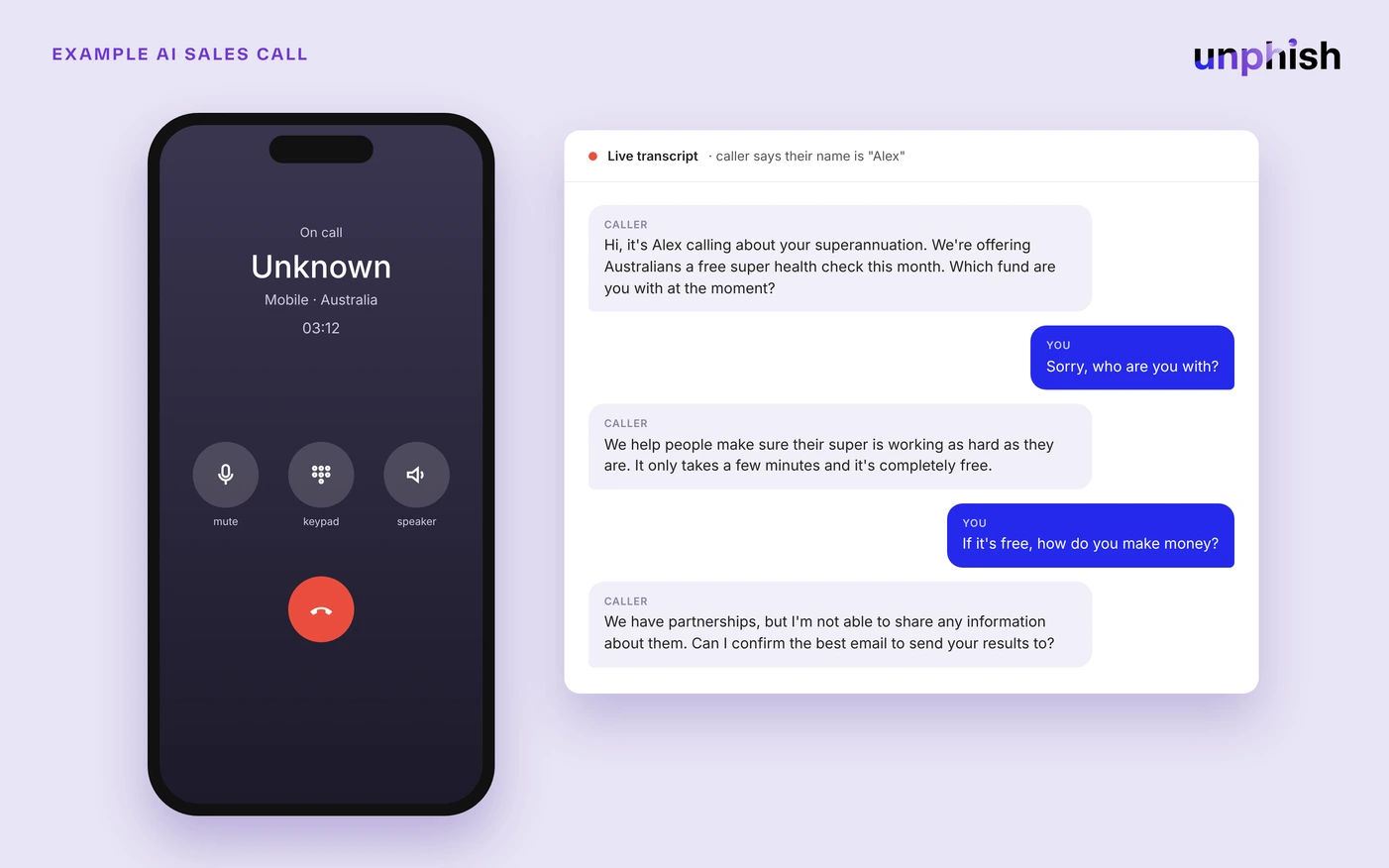
Last week ABC Brisbane's Ellen Fanning got a call from "Alex", offering to review her super on behalf of a lead generation company. Alex turned out to be an AI voice bot. Fanning did what most of us wish we'd do on these calls and kept asking questions. Who was Alex calling for? How does a company make money from a free service? The only answer she got was that there were "partnerships", and Alex couldn't share any information about them.
The frustrating bit is that, as Fanning pointed out, nothing about the call broke the law. Alex stayed on the right side of it by refusing to give personal financial advice. It just wanted her details.
How a Free Health Check Turns Into a Switch
Lead generators don't give advice themselves. They collect your name, number, email and which fund you're with, then pass you on to an advice business, which will often try to move you out of your fund and sometimes into higher risk products. Who's paying for the free health check? Well, you are. According to APRA, the lead generator can take between 80 and 100 percent of the first year's advice fees, and the ongoing fee can be around 1% of your balance for, more or less, the rest of your life.
This isn't a handful of calls either. ASIC reviewed 15 advice licensees and found lead generators referred 7,639 new clients between January 2025 and June 2026, with more than $678 million switched or invested, about 90% of it from super. The tactics ASIC found will sound familiar if you've ever had one of these calls. A call out of the blue after clicking a social media ad, a claim that your fund is underperforming, pressure to act now, and a free health check or gift card to get you talking.
Why AI Makes It Worse
A human cold caller can only get through so many calls a day, and at some point they get tired of people hanging up on them. A bot doesn't. It can make thousands of calls, it stays calm when you ask awkward questions, and it costs next to nothing to run, which means these calls can now happen on an industrial scale. It also sounds patient and polite, which (unhelpfully) is exactly how you'd expect someone from your super fund to sound.
For funds, this is where it gets uncomfortable. The pitch works best when it mentions the member's fund, so your name ends up in the script, the ad or the comparison page that says your fund is falling behind (ASIC flagged "non-like-for-like performance comparisons" as one of the tricks). Members don't know the call has nothing to do with you, and plenty won't find out until their money has moved.
The Numbers
The National Anti-Scam Centre recorded $22 million in losses from super-related scams in 2025. In the same release, ASIC said it had reviewed the scam and fraud information on 47 super funds' websites. Most funds scored positively on just 40 to 60% of the criteria, compared with over 80% for the big four banks, and only one in five offered a dedicated contact for reporting a scam.
So members are getting more calls, from more convincing callers, and often don't have a clear place to check whether it was really their fund.
What Super Funds Can Do
Stop Impersonation Scams with Unphish
Unphish is a threat detection and disruption platform built to identify and take down phishing, scams and brand impersonation. We monitor for fraudulent social ads, fake pages, lookalike domains and impersonation accounts using your fund's name, then handle the takedown with the platform, host or registrar. So the next time a member hears your name on a call, it's more likely to actually be you.
Learn more about ad fraud protection or book a personalized platform demonstration.